

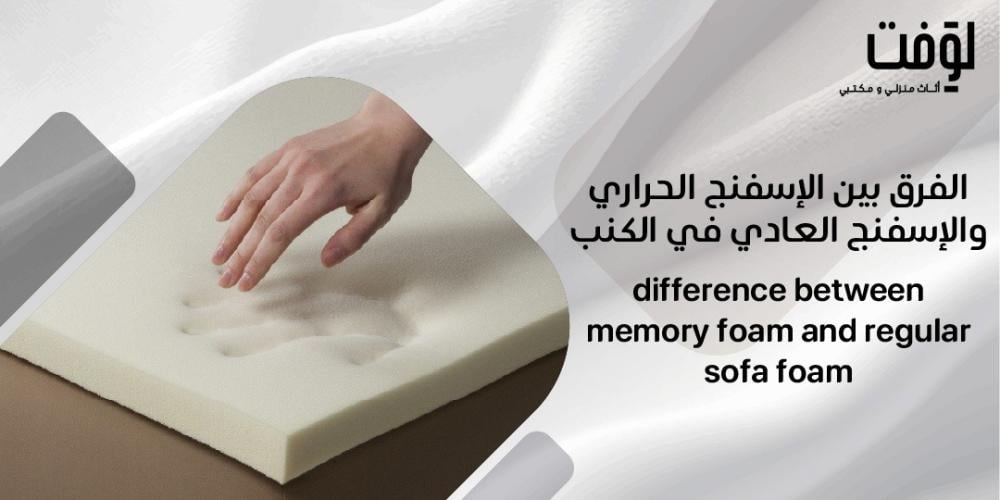
When searching for a new sofa or renovating existing sofa cushions, many people face an important question: what is the difference between memory foam and regular sofa foam?
This question is not just technical curiosity; it reflects a real desire to understand what directly affects daily sitting comfort, back support, sofa durability, resistance to sagging with repeated use, and the level of ventilation provided by each type.
The direct answer is that memory foam — whether in the form of viscoelastic foam or high-density foam — generally outperforms affordable regular foam in these aspects. It maintains its shape for a longer period and provides better body support, while regular foam is a more budget-friendly option but tends to sag faster and is less suitable for intensive daily use.
If you are looking for a sofa that combines quality and durability, you can explore a variety of premium options at Loft Store, which offers collections designed to suit different needs and preferences.
Understanding the Difference Between Memory Foam and Regular Sofa Foam
The sofa market in the Arab region relies mainly on polyurethane foam with different levels of density and firmness. This makes choosing between different foam types a decision worth careful consideration.
When discussing the difference between memory foam and regular sofa foam, three main factors stand out:
- How the foam responds to the body.
- The level of durability.
- The density that determines long-term quality.
1. What Are the Characteristics of Memory Foam?
Memory foam, also known as viscoelastic foam, is distinguished by its ability to respond to body heat. It softens when exposed to pressure and gradually takes the shape of the body before returning to its original form after the pressure is removed.
This feature allows it to distribute pressure more evenly across contact points, reducing stress on sensitive areas such as the back and hips during extended sitting sessions.
Memory foam also has a higher density compared to traditional foam types, which directly contributes to its durability and longer lifespan.
2. What Makes Regular Foam Different?
Regular polyurethane foam does not have thermal response properties. Instead, it quickly returns to its original shape after pressure is removed without adapting to body contours.
It is naturally flexible and performs efficiently in sofas with moderate usage. However, its durability and long-term performance depend heavily on its density.
The lower the density, the faster the foam wears out and loses its flexibility. This explains the significant differences in sofa quality even among products within the same category.
3. How Do Foam Densities Differ?
Density is the most important factor determining the ability of sofa foam to withstand pressure and maintain performance. It is measured in kilograms per cubic meter.
The main density levels include:
Low Density (Less Than 25 kg/m³)
Usually used in economical sofas, this type loses its flexibility relatively quickly with repeated use.
Medium Density (25–35 kg/m³)
Provides a balanced combination of softness and durability and is the most common choice for everyday sofas.
High-Density Foam (More Than 35 kg/m³)
Offers greater firmness and stronger resistance to compression, giving it a longer lifespan and making it suitable for intensive use.
Memory Foam
Usually comes with a high density ranging between 40–80 kg/m³, which explains its higher cost compared to other foam types.
Key Differences Between Memory Foam and Regular Sofa Foam
The difference between memory foam and regular sofa foam is not limited to the material itself. It extends to practical aspects that directly affect daily sitting experience, including comfort level, weight distribution, foam durability, and the ability to recover its original shape over time.
Four main factors determine the performance of each type:
Density
Reflects the weight of the material per unit volume and is the primary indicator of foam quality and durability.
Firmness
Determines the amount of resistance felt when sitting on the surface.
Shape Recovery Ability
Measures how quickly the foam returns to its original form after removing pressure.
Moisture Absorption
Affects ventilation and heat comfort during long sitting periods.
1. Difference in Sitting Comfort
Memory foam responds to both body heat and pressure, gradually shaping itself around the user's body instead of pushing against it.
This creates a supportive and embracing feeling with better weight distribution, which regular foam cannot provide at the same level.
Regular foam has a lower density, causing it to compress faster under body weight without offering the same level of adaptation. Over time, its comfort level decreases noticeably.
2. Difference Between Memory Foam and Regular Sofa Foam in Back Support
Memory foam distributes pressure across wider areas of the body, reducing stress concentration on specific areas such as the lower back and hips.
This distribution helps reduce discomfort that builds up during long sitting periods.
Regular foam, on the other hand, provides fixed support without adapting to body shape, which may create pressure points and gradually cause discomfort, especially during extended use.
3. Difference in Lifespan
Memory foam generally has a higher density, which directly improves its lifespan. It maintains its mechanical properties for a longer period compared to regular foam.
Regular foam with lower density starts losing firmness and structure earlier, meaning sofas filled with it may require cushion replacement sooner.
4. Difference in Ventilation and Heat Retention
Memory foam naturally absorbs and retains some heat because this property is part of how it works.
This can make sitting on it feel warmer in hot climates or during extended use.
Regular foam is generally more breathable, but it may absorb moisture more easily, making it less suitable for humid environments if the density is not sufficient.
5. Difference in Sagging Resistance
Sagging is one of the biggest challenges for sofas, and memory foam performs better in resisting it due to its molecular structure, which provides high flexibility and recovery ability.
Regular foam is more likely to sag, especially in frequently used seating areas. This appears as surface deformation and reduced cushion height over time.
Types of Sofa Foam Available in the Arab Market
The market does not only include two options when discussing the difference between memory foam and regular sofa foam. There are several foam types with different properties and applications.
Understanding these options helps you make a more accurate decision when selecting or replacing sofa cushions.
1. Polyurethane Foam
This is the most widely used type in the market and forms the foundation of most commercial and home sofas.
It is available in multiple densities, ranging from lightweight versions used for back cushions to high-density versions used for daily seating.
2. Compressed Foam
This type has a higher firmness level compared to other options and is specifically designed to withstand heavy use for long periods without losing its shape.
It is commonly used in commercial sofas, waiting rooms, and high-traffic areas.
3. Memory Foam
Contrary to common expectations, memory foam is not widely used as the main filling material for sofas. It is more commonly found in decorative cushions and mattresses.
This is because its body-contouring thermal response is more suitable for sleeping and extended relaxation rather than regular upright sitting.
4. Outdoor Foam
This type is specifically designed to handle harsh environmental conditions. Its structure includes materials that reduce moisture absorption and prevent mold formation.
It is commonly used in outdoor sofas and balconies, and differs significantly from indoor foam in material composition and response to temperature changes.
How Foam Type Affects Daily Sofa Use
The difference between memory foam and regular sofa foam is not only about technical specifications; it directly affects the comfort experience you receive during everyday use.
The way foam responds to body weight, heat, and repeated pressure determines the difference between a comfortable sofa that lasts and one that loses its value quickly.
1. Daily Pressure and Long Sitting Periods
High-density foam and memory foam can absorb body pressure without losing their structure.
With repeated daily sitting, they maintain their original shape and recover after each use.
Regular foam, however, gradually deforms under repeated pressure, creating noticeable sinking in commonly used seating areas and making the sofa appear older than it actually is.
2. Effect of Heat and Moisture
Memory foam is designed to interact with body heat. It softens when touched, creating a feeling of comfort and adaptation to body contours.
Regular foam does not react to heat in the same way, and accumulated moisture over time may contribute to faster deterioration compared to higher-density options.
3. Long-Term Shape Stability
Maintaining foam shape over time is one of the most important quality indicators in sofas.
High-density foam and memory foam maintain their height and structure for years, while regular foam is more likely to experience permanent compression after shorter periods of regular use.
Before purchasing, you can test foam quality by pressing firmly on the sofa cushion and releasing it. If it quickly returns to its original shape completely, this indicates better density and longer durability.
Common Mistakes When Choosing Sofa Foam
Choosing Based Only on Initial Softness
A soft feeling does not always mean high quality. Some regular foam types feel comfortable initially but deteriorate quickly.
Ignoring Recovery Testing
Not pressing the foam and checking how quickly it returns to shape means missing one of the most important indicators of density quality.
Not Asking About the Foam Type
Many buyers focus only on the sofa’s external appearance without asking about the internal foam specifications.
Choosing Memory Foam in Extremely Hot Climates
In very hot environments, memory foam may become overly soft and less comfortable, making high-density regular foam a more suitable option.
Loft Sofa Recommendations
If you are looking for sofas that combine genuine comfort with long-lasting quality, Loft Store provides carefully selected collections suitable for different spaces and usage styles.
1. Halo Three-Seater Sofa with Left Chaise
The Halo Three-Seater Sofa with Left Chaise is an ideal option for those looking for extended comfort in the living room.
Its design combines two standard seats with a left chaise section that provides full body support while relaxing.
When discussing the difference between memory foam and regular sofa foam, this sofa stands out due to its high-quality filling materials that provide lasting flexibility without losing shape over time.
Design:
Comfortable L-shape suitable for corners and spacious seating.
Filling:
High-density materials that maintain softness and support over time.
Frame:
Durable structure ensuring stability with daily use.
2. THE KEY SOFA L SHAPE RIGHT
THE KEY SOFA L SHAPE RIGHT is an elegant L-shaped sofa extending on the right side, making it a practical choice for maximizing room space.
The importance of the difference between memory foam and regular sofa foam becomes clear in models like this, where the filling type directly affects daily comfort and long-term durability.
Shape:
Modern L-design providing balanced seating distribution.
Filling:
Flexible, high-quality materials that maintain sofa structure.
Style:
Clean contemporary appearance suitable for different interior styles.
Frequently Asked Questions About the Difference Between Memory Foam and Regular Sofa Foam
What is the best type of foam for sofas?
The best foam depends on usage style and desired comfort level.
Memory foam provides balanced support and adapts to body shape, while regular foam suits those who prefer a firmer and more stable seating base.
There is no single perfect type for everyone; the right choice depends on personal needs.
What is the best foam type for a sofa?
High-density regular foam is suitable for sofas that handle intensive daily use, while memory foam is a comfortable option for sofas designed for long relaxation periods.
Foam density and firmness are the most important factors when evaluating the best choice.
Conclusion
The difference between memory foam and regular sofa foam is not just a technical detail; it is a real factor that affects comfort level and sofa lifespan.
If you are looking for sofas that combine quality and durability, explore Loft collections and discover different options designed to suit various preferences and needs.